Thank you! We'll get back to you within two business days.
Something went wrong. Please try again or email us at hello@bluedynamic.cz.
Business Consultants
Adriana Pricop & Štěpán Kněžek
We'll get back to you within two business days.
/
article
/
ERP systems in retail - It is important not to challenge the differences of the client
Published:
20.5.2020
Retail specific requirements for ERP systems
ERP systems in retail - The current dynamic time requires efficient work with goods. This also results in the specific requirements of retail companies for ERP systems in retail. It is necessary to know the processes and operation of a business company well in order to be able to design a system that really delivers the effect that retail companies expect. And let's face it, today's retail industry is dependent on IT.
ERP systems in retail — how are they different?
Concept”ERP“itself is not unambiguous and refers to enterprise software that has been designed to record and manage enterprise data. ERP system Thus, it refers to the automation and integration of the basic activities of the company, which will help it focus on efficiency and simplification of processes. In fact, we can think of ERP systems in analogy to the classic building of a house as its foundations - ERP does not dazzle anyone, but if it is not well executed and designed, the construction collapses.
In the field of retail, it is more important than elsewhere to approach the implementation of ERP systems with knowledge of the environment. ERP packages are, of course, designed to be as general as possible and their components cover the solution of key topics. But to propose a general solution that suits all types of customers is quite unrealistic. That's like you want to have the same car design usable as both a truck and a sports car. Therefore, it is important to choose a solution that offers vertical additions that allow adaptation to specific needs.
Knowledge of the environment decides
The specifics of individual retail companies go against the general ERP solution; bending and customizing these general frameworks is quite complex and expensive. So what about it? When choosing a supplier, it is necessary to find out who has real experience in deliveries for retail companies, knows the specifics of the industry, and ideally has a certain “gift” prepared in advance — solving some part of the problem that speeds up deployment and makes the entire implementation cheaper, thereby increasing the value of the system for the customer. Time is a parameter that plays a role in business more than elsewhere.
The customer needs an ERP specialist, but also a person who is not new to the retail environment — they can speak their language, they know the critical points. Companies need a robust solution that can be complemented by layers that capture its key differences. In retail, such family silver is typically people-to-traffic reward systems or inventory tracking systems. The correct motivation of the salespeople at the outlets is what stands with and falls the success of the store. When implementing ERP, you need software that is flexible enough to make the desired change. And also an implementer that will bridge the complex IT world and the business world.
What are the key features of ERP systems in retail?
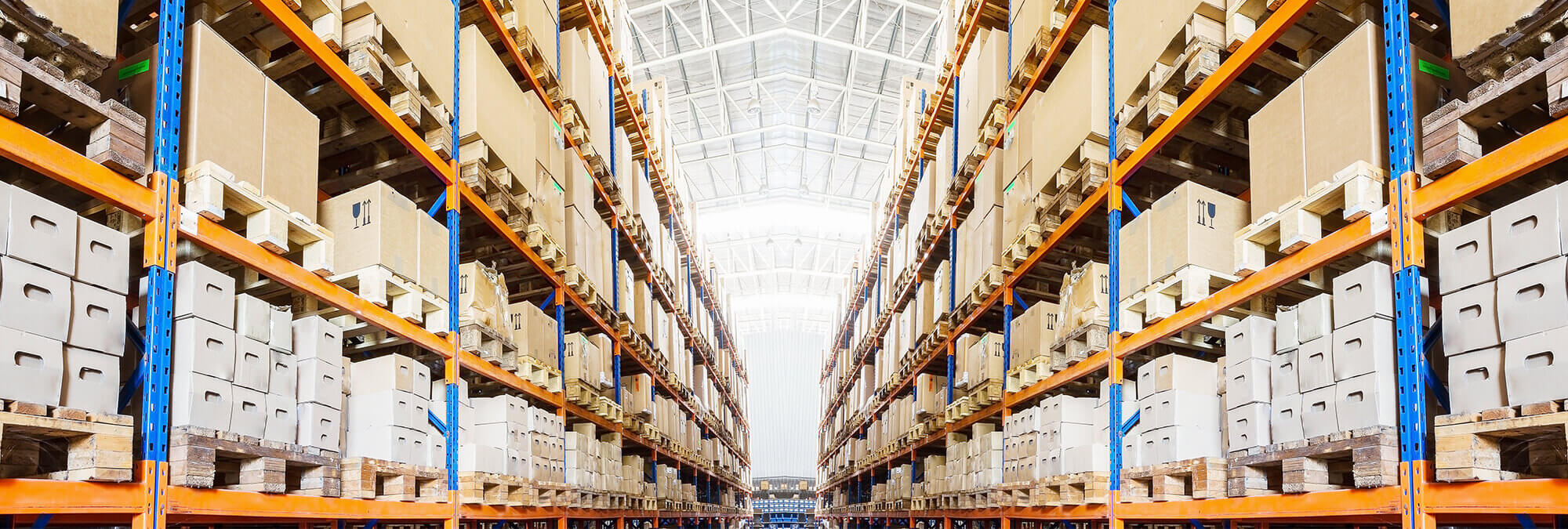
First and foremost, ERP systems in retail must be as reliable as possible to ensure trouble-free operation. Also, a properly assembled assortment and inventory volume are what determines the success of the seller. It needs to have the goods picked up and delivered in the right quantity, at the right time and in the right place. And to do this, keep only enough stock in the central warehouse to ensure a smooth supply. It seems trivial, but it certainly isn't.
Moreover, at present, several channels need to be integrated — e-shop, physical stores, call center and central supply. If the customer enters the system, it is necessary that the call center can handle the complaint of goods from the physical store and from the e-shop, at the store, for example, he can pick up goods ordered through the e-shop. And we are not talking about the optimal use of customer data across all sales channels.
Critical places
In retail, it is especially critical trouble-free operation of systems It is very easy to lose the favor of end customers. The current stores are vitally dependent on IT - the stone shop is completely crippled by the outage of the cash register system. Tense shopping seasons, such as the pre-Christmas period, will once again test the warehouse systems of many retailers. There must be no so-called stock-outs, i.e. situations where the store does not offer goods that customers are currently interested in.
On the other hand, there is the need to optimize warehouse stocks. Retail companies have hundreds of millions of kronor in goods they need to sell, preferably at full price. This is noticeable, for example, with consumer electronics, which very quickly become obsolete and lose in price with each passing week. Therefore, an essential part of systems for retail companies is the prediction of the necessary inventory and seamless distribution to all channels.
Most retailers currently both brick-and-mortar stores and e-shops. And these have a completely different sales cycle. So it is also important to reconcile these two cycles in terms of both supply and pricing, and to benefit from the possibilities that the combination of these sales modes offers. And as said above, you need to share customer information across all channels.
State-of-the-art technology in retail
ERP is a dinosaur thing from a certain point of view, but modern elements like AI and machine learning are penetrating here. Typically, it is precisely for inventory optimization, when the software continuously “learns”, combines sales data, looks for connections in what effect sales have on sales, for example, the cheapening of various substitutes, the role of weather, price changes in competitors. And accordingly, in the future, he will be able to optimize the stock of goods in stores.
The second broad field of application of artificial intelligence is customer expirience — the ability to monitor customer moods, evaluate the semantics of posts on the Internet and transfer these experiences to the real world. An example can be our application — “mirror”. It knows how to evaluate that you are a man and have a beard and sends an offer of shaving cosmetics, offers the ladies a lipstick suitable for their outfit.
AI systems will certainly be developed to ensure that advertising is really tailored to the customer. These systems can combine data associated with, for example, your Google account and shopping behaviour wherever you enter your address with systems at the retailer's brick-and-mortar locations, which map not only what you buy, but also what items you stay or view for longer and prepare a truly personalised ad accordingly.
ERP systems in retail to serve business
I see the excellence in the implementation of ERP systems in retail by selecting what is a key differentiator for the customer in the market, in which to invest and prepare tailor-made solutions. On the contrary, in some areas I advise you prefer to modify the processes and take advantage of what the implementor or software manufacturer offers. But the core know-how needs to be captured and preserved, not adapted to the needs of the generally designed system.
Karel Pecl, CEO, Blue Dynamic
The author of the article is the founder of Blue Dynamic, which has many years of experience in supplying IT solutions for retail.
ERP systems in retail - It is important not to challenge the differences of the client
Let's talk
/ Whether you know exactly what you need or just want to explore opportunities and possibilities.